Industry Development Status and Domestic & Foreign Technology Trend of Dual-Axis Wafer Grinder
The
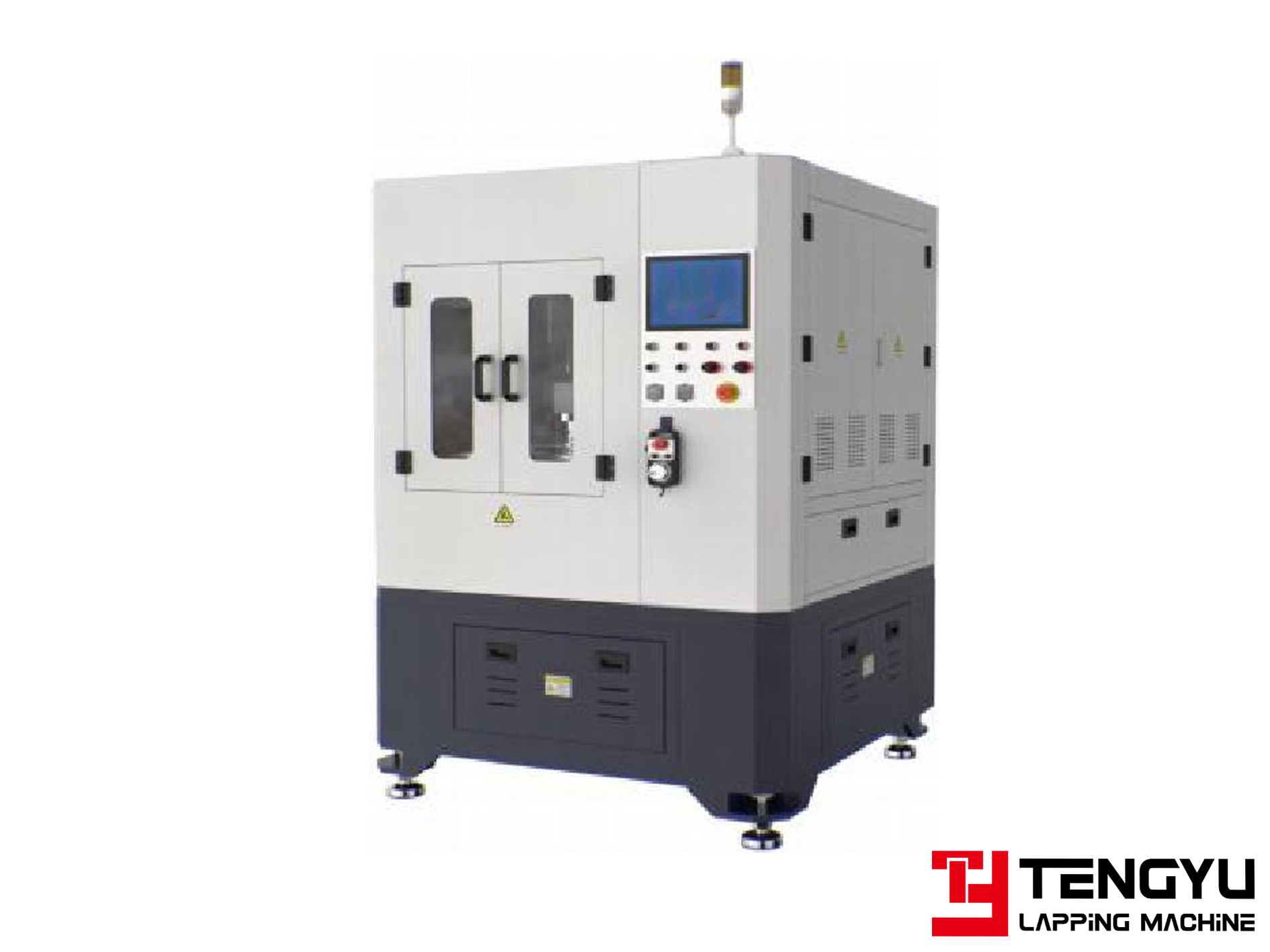
Dual-Axis Wafer Grinder is the core key equipment for the ultra-precision backside thinning process of semiconductor wafers. Adopting an integrated structure of dual-axis coordinated rough and fine grinding, it realizes low-stress, high-uniformity and high-efficiency thickness processing for silicon-based and third-generation semiconductor wafers. Widely applied in chip packaging, power device manufacturing and advanced integration processes, it is an indispensable core process equipment in the post-semiconductor precision processing segment.
China’s dual-axis wafer thinning industry started relatively late. The high-end market was fully reliant on imported equipment for a long time in the early stage, while domestic manufacturers could only produce low-end single-axis and simple grinding equipment. There was a significant gap in overall machining accuracy, automation level and process stability. With the advancement of semiconductor localization policies and the rapid expansion of domestic packaging & testing and power chip industries, domestic dual-axis thinning technology has undergone continuous iterative upgrading. Fully automatic models have achieved mass production and application, basically completing substitution for mid-to-low-end processes, and are accelerating progress toward high-end ultra-thin wafers and hard brittle material processing fields.
From the perspective of overall technical comparison at home and abroad, international high-end Dual-Axis Wafer Grinder technology features high maturity. Its core advantages lie in ultra-high precision spindle systems, long-term operational stability, accumulated ultra-thin low-damage processing technology and full closed-loop thickness control capability. It delivers excellent total thickness deviation control of the whole machine, low fragmentation rate and minimal damage layer in ultra-thin processes, adapting to mass production demands of large-size and high-hardness special wafers, with complete process databases and high equipment uptime rate. Its disadvantages include high equipment procurement cost, long delivery cycle, high later maintenance cost and slow localized process adaptation response.
Domestic dual-axis thinning equipment boasts obvious overall cost-performance advantages, with lower equipment pricing and maintenance costs, fast localized service response and high flexibility in process customization, well suited to mass production demands of domestic medium and small-size wafers with conventional thickness. The domestic supporting industrial ecology continues to improve. Shortcomings are mainly reflected in insufficient stability of core precision components, weak consistency in long-term continuous processing, inadequate accumulated complete processes for high-end ultra-thin thinning, special edge treatment and hard brittle materials, and room for improvement in mass production yield of high-precision processes.
The future industry development will evolve around four major directions: high-precision ultra-thin processing, low-stress & low-damage process, intelligent closed-loop regulation and independent R&D of core components. It will continuously narrow the technical generation gap between China and foreign countries, and promote the full localization substitution of Dual-Axis Wafer Grinder in high-end processes.





 English
 русский
 한국어
한국어 Deutsch
 español
 italiano
 العَرَبِيَّة