Optical components feature brittle material properties and high sensitivity in optical performance, requiring extremely strict standards for overall flatness, parallelism and surface quality. Conventional lapping equipment adopts extensive processing technology with poor operational stability. Uneven force application and disordered grinding trajectories during processing easily cause surface ripples, scratches and edge chipping on workpieces, as well as latent surface damage, resulting in deviations in optical performance and failing to meet the precision manufacturing requirements of high-end optoelectronic devices.
The
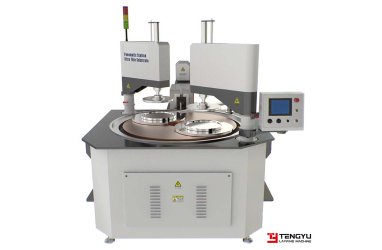
Optical Glass Lapping Machine adopts a high-precision planetary lapping structure, which delivers uniform and regular workpiece operation trajectories and balanced grinding force across the entire processing area, eliminating local over-grinding and uneven grinding problems. The equipment supports precise adjustment of pressure and rotating speed to adapt to the processing requirements of various optical glass materials and components of different specifications. Adopting a micro layer-by-layer removal process, it efficiently removes cutting residues, surface height differences and micro defects on workpieces.
With excellent overall shock absorption performance and stable operation, the equipment fundamentally avoids workpiece deformation, cracking and residual stress, greatly improving the overall flattening accuracy and batch consistency of optical components. The processed components have flat, smooth surfaces and stable optical performance, and can be seamlessly connected with subsequent processes such as polishing, coating and precision bonding. It is applicable to both sample research and trial production and mass production, supporting the standardized finishing production of various precision optical components.







 English
 русский
 한국어
한국어 Deutsch
 español
 italiano
 العَرَبِيَّة