The
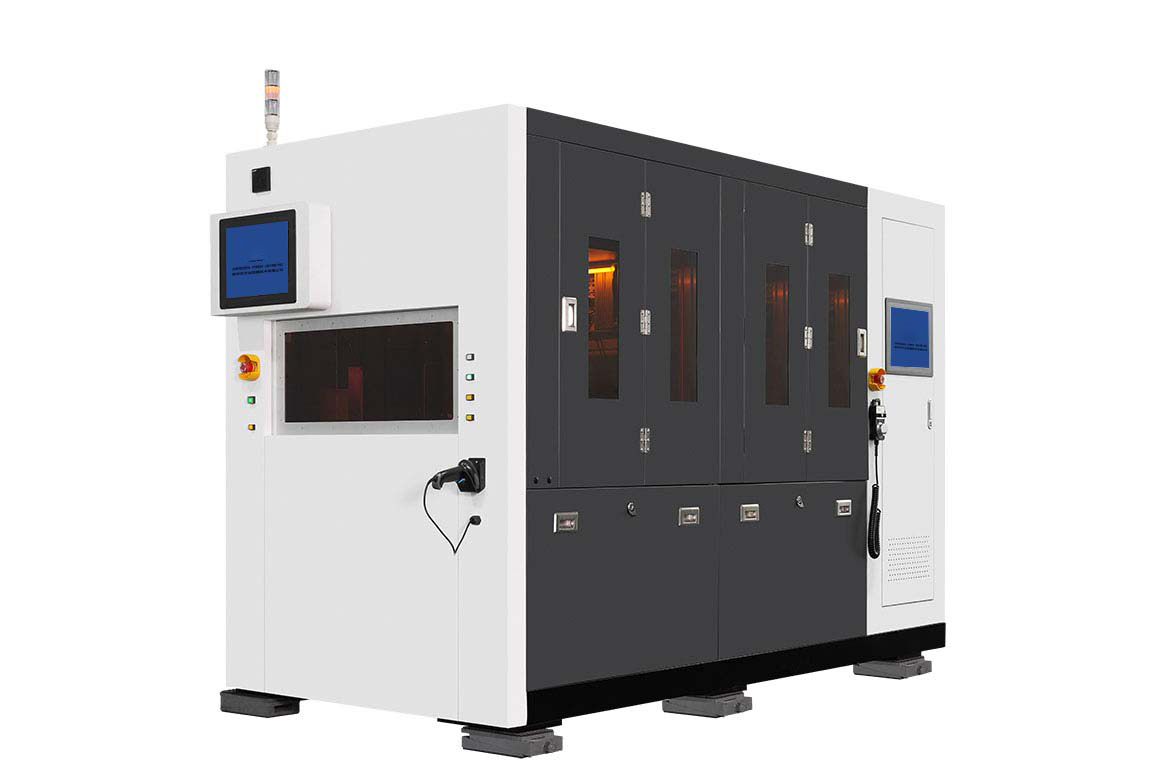
air-floating wafer thinning machine is key process equipment in high-end semiconductor manufacturing. Based on air-floating support technology, it realizes non-contact wafer carrying and high-precision grinding, with irreplaceable advantages in processing ultra-thin, hard and brittle wafers. This paper analyzes the essential differences between it and traditional contact-type thinning machines from the core dimensions of technical principle, processing performance, operation and maintenance adaptation, and sorts out the core logic for factory selection.
The core differences focus on three points:
First, the supporting and fixing principle. Traditional contact-type thinning machines rely on vacuum chucks to physically adsorb wafers. Contact pressure easily causes wafer warpage and edge damage, especially unsuitable for ultra-thin wafers. The
air-floating wafer thinning machine forms a uniform air film through high-pressure clean gas to realize non-contact suspension support, completely avoiding damage caused by contact stress. It can stably process 20–50 μm ultra-thin GaAs and SiC wafers.
Second, processing consistency and quality. Affected by chuck wear and uneven adsorption, traditional contact-type models show large TTV fluctuations after processing, with easy residual chuck marks and scratches on the surface. The air-floating model has no contact friction. With precise air-film pressure control and online thickness monitoring, TTV accuracy can be stabilized within ±0.8 μm, surface roughness Ra ≤10 nm, greatly improving subsequent packaging yield.
Third, equipment operation, maintenance and adaptability. Traditional contact-type models require regular replacement of worn chucks, with short maintenance cycles and high costs. Moreover, multi-size wafer conversion needs frequent adjustment of chuck parameters. The air-floating model has no consumable contact parts; maintenance only requires cleaning the air circuit and calibrating pressure, reducing operation and maintenance costs by more than 30%. It is compatible with 4–12 inch multi-size wafers, with convenient and efficient model change.
Factories prefer the air-floating model mainly because it meets the needs of high-end manufacturing upgrading. It not only solves the core pain points of traditional contact-type machines in processing ultra-thin, hard and brittle wafers, but also adapts to the large-scale production needs of advanced packaging with stable processing quality and lower comprehensive operation and maintenance costs, making it essential equipment for high-end semiconductor manufacturing.
In practical applications, mechanical thinning machines dominate mass production, while laser thinning equipment is mostly used in high-end niche scenarios. The two often form a process-complementary relationship rather than substitution.







 English
 русский
 한국어
한국어 Deutsch
 español
 italiano
 العَرَبِيَّة