Differences Between Semi-Automatic and Fully Automatic Wafer Grinders
2026-01-221156
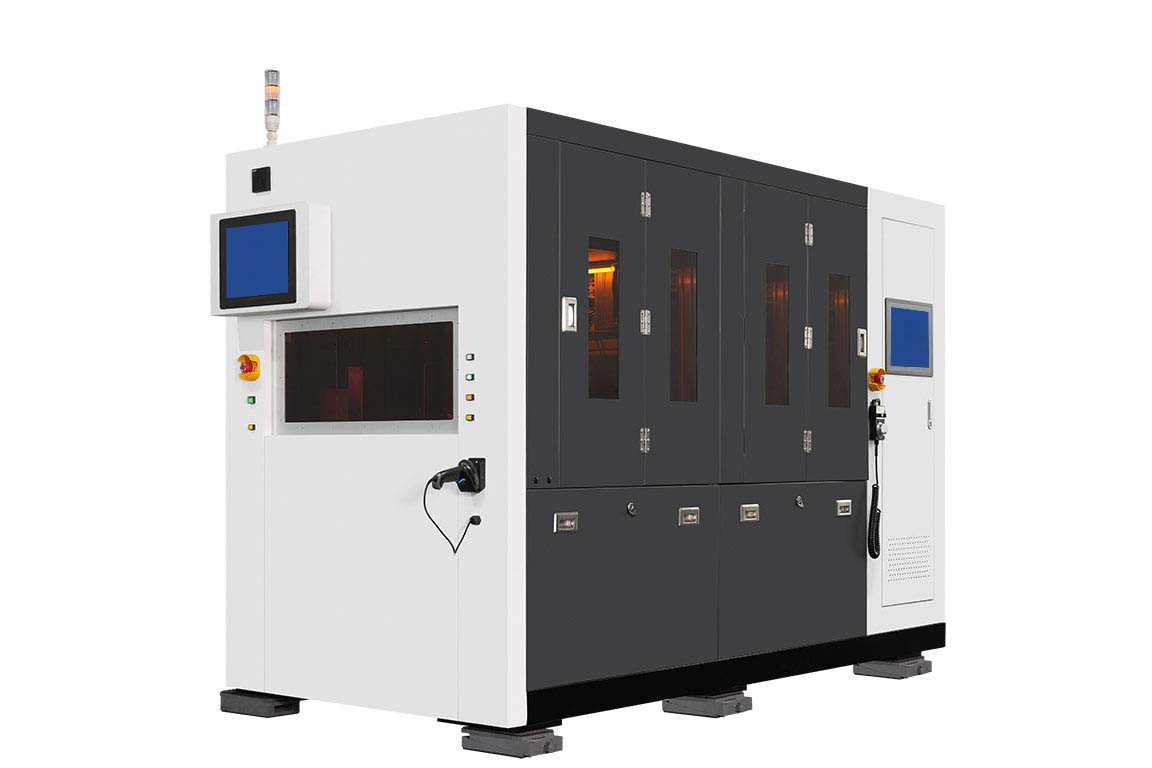
Wafer grinders are primarily categorized by their level of automation into Semi-Automatic Wafer Grindersand Fully Automatic Wafer Grinders. While the core function of both is the precise reduction of wafer thickness, they differ significantly in automation processes, production capacity adaptation, and cost investment, making them suitable for different production scenarios.
The core differences are concentrated in three areas:
1. Operational Process
Semi-Automatic: Only the core grinding process is automated. Auxiliary operations such as loading, unloading, wafer alignment, and recipe selection require manual labor. Parameter adjustments are also manual during model changes.
Fully Automatic: Equipped with robotic arms and intelligent scheduling systems, it achieves unmanned operation for the entire process including loading, inspection, grinding, and cleaning, requiring no human intervention.
2. Capacity and Control
Semi-Automatic: Suitable for small to medium-batch production. It offers flexibility for model changes but has limited single-shift capacity.
Fully Automatic: Adapted for large-scale mass production. It can run continuously for 24 hours, with a single-shift capacity 2-3 times that of a semi-automatic model. Furthermore, it features closed-loop control for real-time parameter calibration, resulting in superior yield stability.
3. Cost and Adaptability
Semi-Automatic: Procurement and maintenance costs are moderate, and the operation threshold is low. Ordinary employees can master the operation after short-term training, making it suitable for SMEs and R&D scenarios.
Fully Automatic: Equipment investment is high, with strict requirements for the workshop environment and supporting systems. Maintenance costs are also high, making it suitable only for large-scale mass production by leading enterprises.