Core Advantages of the Dual-Axis Wafer Grinder and Why It Has Become the Mainstream Choice for Precision Machining
The
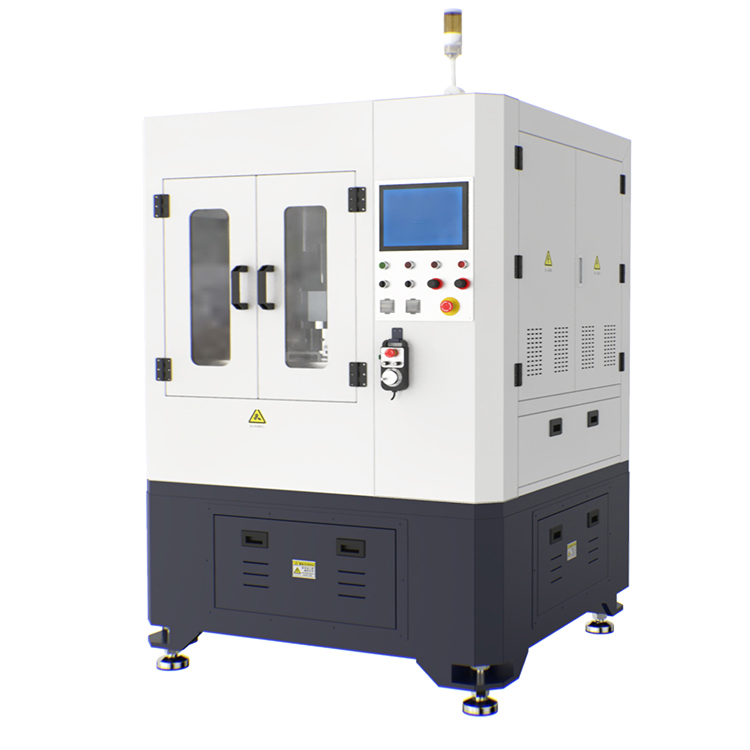
Dual-Axis Wafer Grinder is the core equipment for precision wafer thinning. It realizes the integrated processing of rough grinding and fine grinding through the coordinated operation of dual spindles, satisfying the ultra-thinning and high-precision requirements of advanced packaging. With distinct advantages over single-axis models, it has emerged as the mainstream option for medium-to-high-end manufacturing scenarios.
Its core advantages are concentrated in three aspects. First, processing precision and quality. Single-axis machines must perform rough grinding and fine grinding in separate steps, and positioning deviations are prone to occur during process switching. Their TTV control accuracy is mostly ±2–3 μm. In contrast, the Dual-Axis Wafer Grinder operates with dual spindles synchronously. Fine grinding follows rough grinding directly without secondary positioning. Equipped with closed-loop control via dual high-precision sensors, its TTV accuracy can reach within ±1 μm. It effectively reduces defects such as surface scratches and edge chipping, and is compatible with 8–12 inch wafers as well as hard and brittle materials including silicon carbide and gallium arsenide.
Second, production efficiency. Single-axis machines feature cumbersome process connections and long single-wafer processing cycles. The Dual-Axis Wafer Grinder enables parallel processing of rough grinding and fine grinding, eliminating the need for grinding wheel replacement and parameter adjustment. This drastically shortens process intervals, boosting single-wafer processing efficiency by more than 40%. Its per-shift production capacity is significantly higher than that of single-axis machines, making it suitable for mass and large-scale production.
Third, stability and adaptability. Frequent process switching on single-axis machines accelerates equipment wear, and parameter fluctuations compromise yield. The Dual-Axis Wafer Grinder boasts a high degree of parameter standardization, delivering stronger operational stability with dual-axis coordination and smaller yield fluctuations. Moreover, it can be adapted to the thinning requirements of wafers with varying thicknesses and materials through recipe optimization. It has a moderate operation threshold, allowing ordinary operators to master operation after short-term training.
Factories prioritize the
Dual-Axis Wafer Grinder primarily because it balances precision, efficiency and adaptability. It overcomes the shortcomings of insufficient precision and low efficiency inherent in single-axis machines, while avoiding the high costs associated with high-end multi-axis models. Precisely matching the precision thinning demands of advanced packaging, it has become a cost-effective solution for medium-to-high-end wafer processing scenarios.





 English
 русский
 한국어
한국어 Deutsch
 español
 italiano
 العَرَبِيَّة