Precision bearing steel parts generally suffer from micro-deformation and surface residual stress after quenching and tempering, which constitute the core problem that cannot be solved by conventional lapping processes. Traditional lapping only brightens and levels the workpiece surface, failing to correct micro-warpage and flatness deviation caused by heat treatment. Residual stress leads to gradual deformation of workpieces during service, directly causing bearing jitter, precision attenuation and shortened service life, making it impossible to meet the long-term stable operation standards of precision bearings.
The
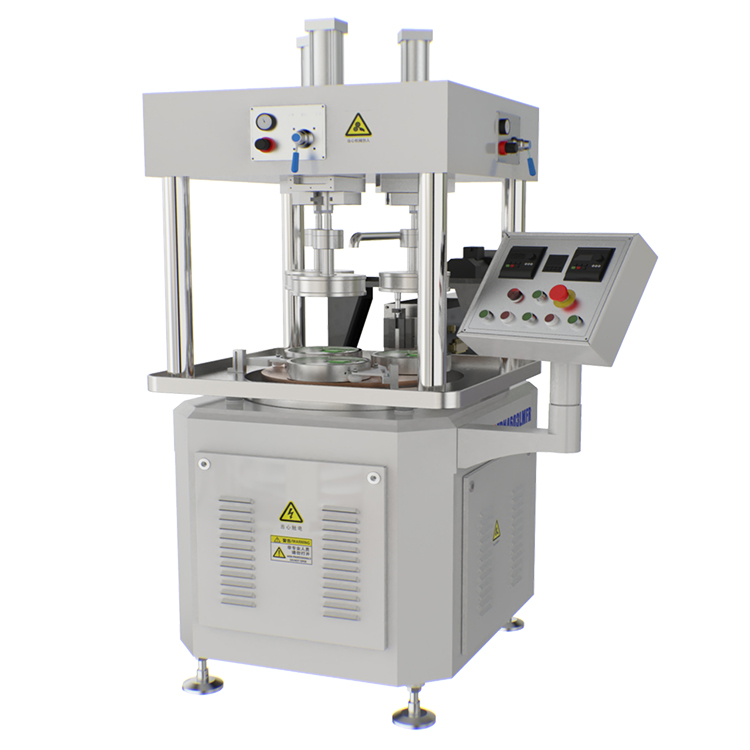
Bearing Steel Lapping Machine adopts a
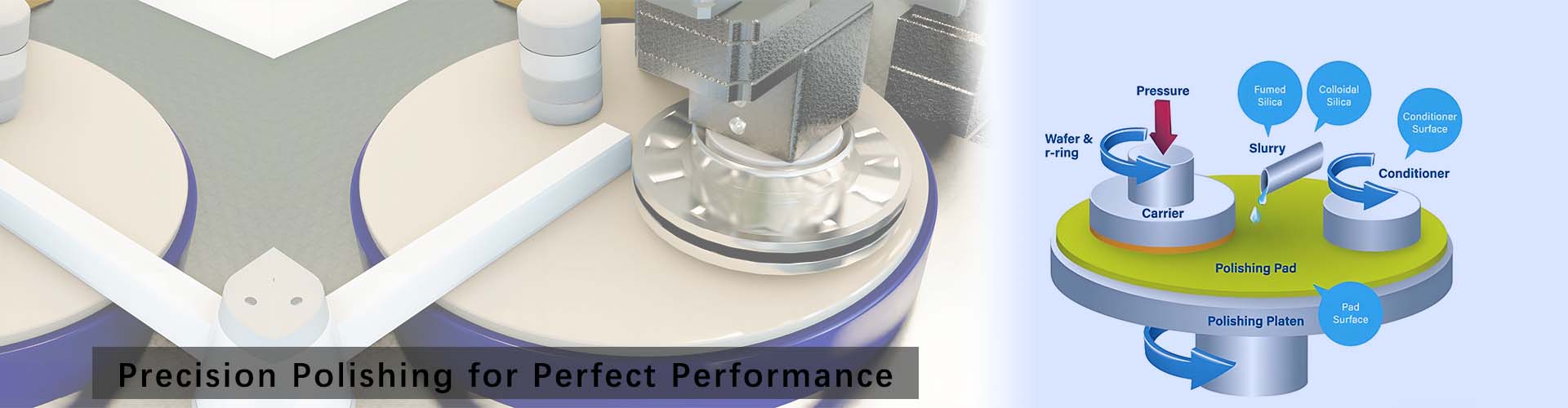
low-stress micro-lapping process, specially designed for the finishing of high-hardness bearing steel workpieces after heat treatment. Different from traditional high-force grinding, the equipment focuses on uniform micro material removal. Equipped with a high-rigidity shock-absorbing frame and a constant pressure control system, it completely avoids secondary stress generated by concentrated cutting. While leveling the workpiece surface, it gradually releases and eliminates internal residual grinding stress, fundamentally solving the problem of subsequent workpiece deformation.
The uniform lapping trajectory fully covers the entire workpiece surface, accurately correcting flatness and parallelism errors caused by heat treatment. Processed workpieces feature ultra-flat surfaces and excellent dimensional consistency. No grinding burns or extrusion marks remain on the surface layer, the metallographic structure stays stable, and the original hardness and wear resistance of bearing steel are well preserved without damage.
The complete processing process is applicable to the machining of various bearing steel gaskets, bearing sleeves and precision steel sheets, with solidified procedures and high repeatability. It eliminates frequent manual parameter fine-tuning and effectively reduces batch quality differences, suitable for sample development and large-scale mass production. Through stress optimization and deformation correction, it greatly improves the assembly accuracy and operational stability of bearing accessories and extends the overall service life of precision bearings.





 English
 русский
 한국어
한국어 Deutsch
 español
 italiano
 العَرَبِيَّة